17 de July, 2026
Transform your Mexican restaurant with these 7 authentic interior design themes. From Oaxacan folk art to Jalisco hacienda style, find the perfect aesthetic for your brand.
The most successful Mexican restaurants in the United States are winning on two fronts simultaneously: exceptional food and an environment so visually compelling that customers share it organically on social media. Interior design is no longer a purely functional decision — it's a marketing asset, a brand differentiator, and a key driver of repeat visits. Here are seven authentic themes, each rooted in a real Mexican regional aesthetic, that are delivering results for restaurant owners in 2025.
1. Jalisco Hacienda / Colonial Style
The colonial hacienda aesthetic draws from the grand estates of Jalisco, Michoacán, and Zacatecas — the whitewashed walls, terracotta tile floors, exposed wood ceiling beams, and the quiet grandeur of spaces built for generations. This is the most "classically Mexican" aesthetic and resonates strongly with both US-born Hispanic customers seeking nostalgia and Anglo customers seeking authenticity.
Key furniture pieces: Long refectory-style tables in dark walnut or parota wood, Spanish colonial chairs with carved backs and leather seats, wrought iron chandeliers, high-back booths with arched wood frames. Colonial sideboards and credenzas work beautifully as service stations or tequila displays.
Colors and materials: Adobe white, terracotta, Spanish ochre, deep burgundy. Clay tile, wrought iron, hand-painted Talavera ceramic accents on walls and bar surfaces.
2. Oaxacan Folk Art Style
Oaxaca has become one of the most photographed states in Mexico — its bold graphic patterns, vibrant hand-painted animals (alebrijes), black clay pottery (barro negro), and embroidered textiles are instantly recognizable globally. A restaurant built around this aesthetic positions itself as a sophisticated, culturally specific alternative to the generic "Mexican restaurant."
Key furniture pieces: Painted wood chairs in deep cobalt, forest green, and coral with hand-painted floral patterns on backs and seats. Tables with painted Zapotec geometric motifs. Display shelves built around alebrijes and barro negro pieces.
Colors and materials: Deep purple, cobalt blue, magenta, forest green. Against a white or natural plaster wall, these colors create maximum visual impact without overwhelming the space.
3. Coastal Veracruz Style
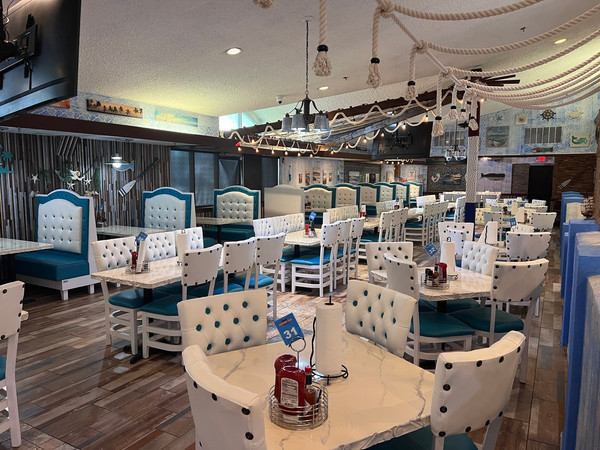
The Gulf Coast aesthetic of Veracruz and the Yucatán peninsula brings lightness, tropical warmth, and the energy of port cities into your dining room. Think ceiling fans with rattan blades, natural palms, whitewashed wood, and the casual elegance of a portside mariscos restaurant on a warm evening.
Key furniture pieces: Natural cedar or bamboo chairs with open weave backs, white-painted tables, bancos (benches) with woven palm cushions, hammock-style accent seating near the bar. Equipales in natural palm (the outdoor variety) work perfectly in this style.
Colors and materials: White, sea foam green, turquoise, natural rattan. Whitewashed wood surfaces with aged brass or copper hardware. This is the lightest and most airy of the seven themes.
4. Modern Mexican / Mexico City Contemporary
The design language emerging from Mexico City's Polanco, Condesa, and Roma neighborhoods blends Mexican craft traditions with contemporary minimalism. This is the "elevated" Mexican restaurant aesthetic for upscale dining — the one that works for $60+ per-person check averages in markets like Miami, New York, and San Francisco.
Key furniture pieces: Solid hardwood tables (mesquite or encino) with simple, architectural forms and natural oil finishes. Chairs in black steel with leather seats. The artisan element comes through in texture and material, not in painted decoration. Handwoven textile runners on tables and acoustic panels of natural fibers on walls.
Colors and materials: Charcoal, natural leather, cream plaster, dark hardwood. Concrete countertops. The palette is restrained; the craft is the detail.
5. Cantina Tradicional
The traditional Mexican cantina is a purely masculine, unapologetically unpretentious space with a 200-year aesthetic history. Long wooden bars, high stools, tiled walls, vintage mezcal bottles, and the specific clutter of a space that prioritizes conversation and drink over Instagram. This aesthetic is having a significant resurgence as a counter-reaction to the overly polished "fast-casual Mexican" format.
Key furniture pieces: High bar stools in dark wood with leather seats, a substantial solid wood bar top (mesquite or parota), wooden tables with heavy bases, and iron accents throughout. Bulletin boards, old photographs, and vintage Mexican advertising art on the walls.
Colors and materials: Dark wood, worn leather, green or blue Talavera tile, aged copper and brass fixtures. Deliberately imperfect and lived-in.
6. Tonalá Rustic — The Artisan Craftsman Style
Named for the artisan capital of Mexico, this style celebrates the craft itself as the aesthetic. The raw material — the grain of the wood, the hand-applied finish, the visible joinery — is the design. Furniture pieces are chosen to showcase the skill of the artisan, not to disappear into a neutral setting.
Key furniture pieces: Live-edge parota tables, hand-turned leg chairs, equipales in genuine leather, and hand-forged iron lighting. The artisan-made booth with a wood backframe, carved details, and hand-applied patina finish is the signature piece of this style.
Colors and materials: Natural wood tones (honey, walnut, aged gray), natural leather, iron, and ceramic. The walls stay simple — textured plaster or exposed brick — to let the furniture speak.
7. Mexican Market / Mercado Style
The energy and abundance of a Mexican market — the color, the layering, the organized chaos — translated into a restaurant environment. This is the most accessible theme for customers unfamiliar with Mexico, because it aligns with the festive image of Mexican culture that already exists in popular imagination. Done well, it's genuinely joyful. Done poorly, it becomes a caricature.
Key furniture pieces: Painted wood chairs in multiple colors (each table can have a different color scheme), large communal tables, papel picado overhead (but in permanent fabric, not paper), display walls of colorful ceramics and woven baskets.
Colors and materials: The full Mexican palette — cobalt blue, coral red, gold, forest green, hot pink. The key to avoiding kitsch is quality: the difference between a paper flower and a handmade fabric flower, or between a cheap printed tablecloth and genuine hand-loomed fabric, is immediately visible.
Whichever theme resonates with your brand vision, our artisan workshops in Tonalá can supply the furniture that makes it real. Browse our full restaurant furniture catalog or share your concept with us for a curated proposal.
Your design vision. Our Tonalá craftsmanship.
We fabricate custom restaurant furniture for all 7 themes, in any combination. Share your floor plan and concept — we'll propose the pieces that make it work.